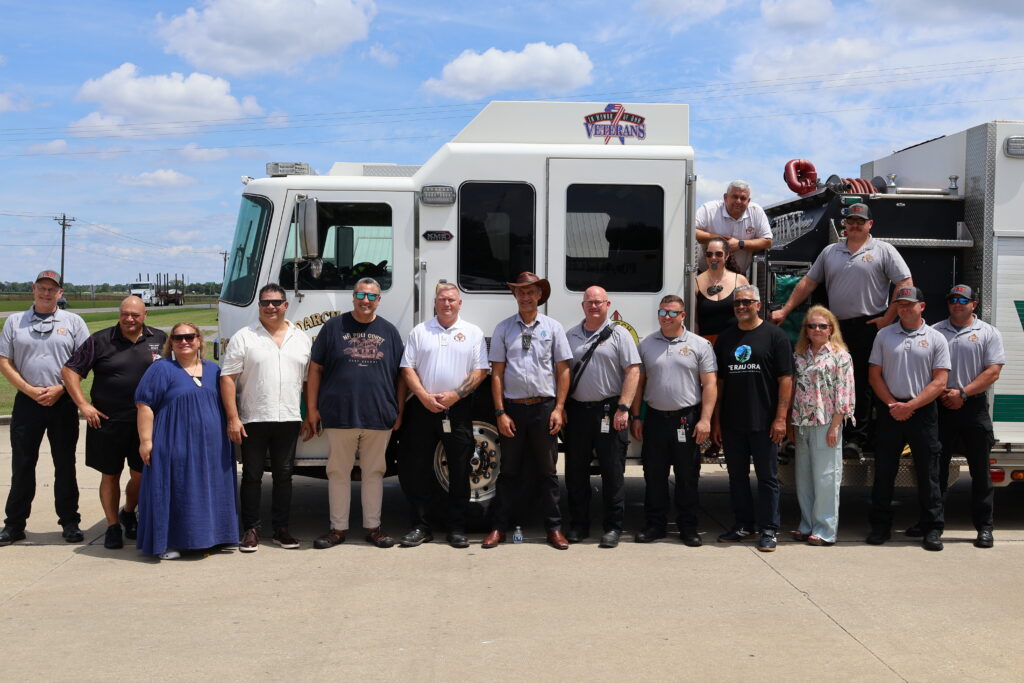
Poarch Creek Indians Host Māori Representatives From New Zealand Iwi (Tribe)
Share this:
The Poarch Creek Indians (PCI) welcomed representatives of the Māori iwi of New Zealand for a visit to the reservation in Atmore, Alabama as part of a cultural and leadership exchange. During the two-day visit, the delegation enjoyed discussions with Poarch Creek Tribal Council leaders to learn about the Tribes path to sovereignty, self-governance and the strategies that have contributed to Poarch Creek’s success.
The group enjoyed an extensive tour of the Tribal Reservation including the Museum & Welcome Center, Community Center, Environmental Department, Health Department, Lavan Martin Assisted Living Facility, Fire Department and Wind Creek Casino Atmore.
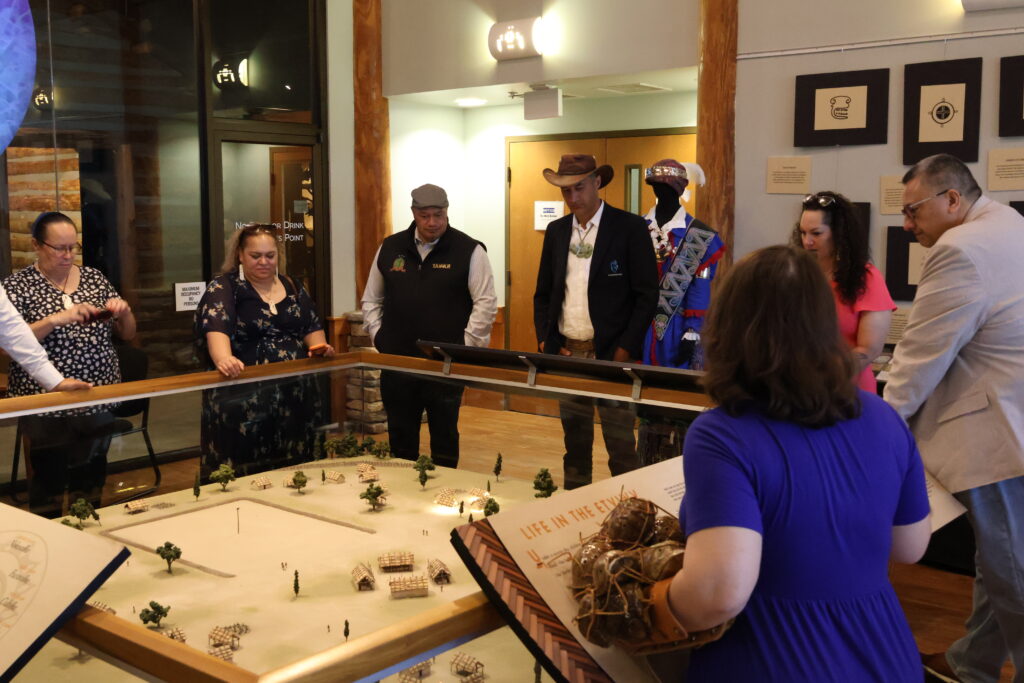
The tour began at the Poarch Creek Museum, where Vice Chair Robbie McGhee welcomed the guests and provided an overview of the Tribes history. Andrea McGhee, the Museum Technician, and Billy Bailey, the Tribal Historic Preservation Officer, then led a tour of the museum. During the visit, two Māori representatives joined McGhee and Bailey in a stickball demonstration. Stickball, formerly known as “Little Brother of War”, was a game that was played by Creeks in order to prevent an all-out war between tribes. Today, the game is still played socially.
While at the museum, Māori representatives shared stories of challenges similar to those faced by PCI, including colonization, cultural loss, and struggles with government policies.
At the Poarch Creek Community Center, Danielle Balaban, Community Services Administrative Assistant, led the first portion of the tour through classrooms and community spaces. Justin Rolin, Cultural Education Coordinator, guided the second half of the tour, highlighting the cultural components of the center and how they engage with Tribal Citizens by teaching traditional Creek practices.
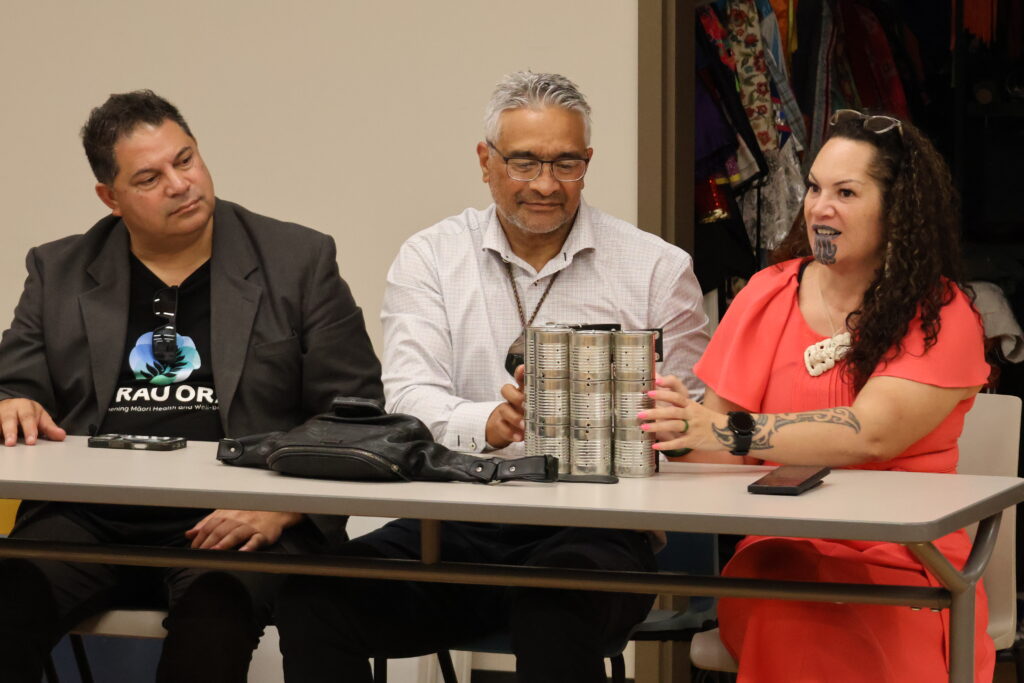
One stop during the tour focused on how the Muscogee language is taught in classrooms. During the discussion, Māori representatives shared their experiences revitalizing and preserving their own language.
On the second day, the delegation visited the Buford L. Rolin Health Clinic, where Kelly Dirting, Health & Human Services Division Director, and Dr. Semple led a tour of the facility. They showcased the clinic’s advanced technology and discussed its history, future plans, and ongoing challenges.
Following the clinic visit, Martha Gookin, Elder Services Division Director, led a tour of the Lavan Martin Assisted Living Facility. Gookin highlighted the services available to Tribal Elders, including health care, housing and nutrition programs.
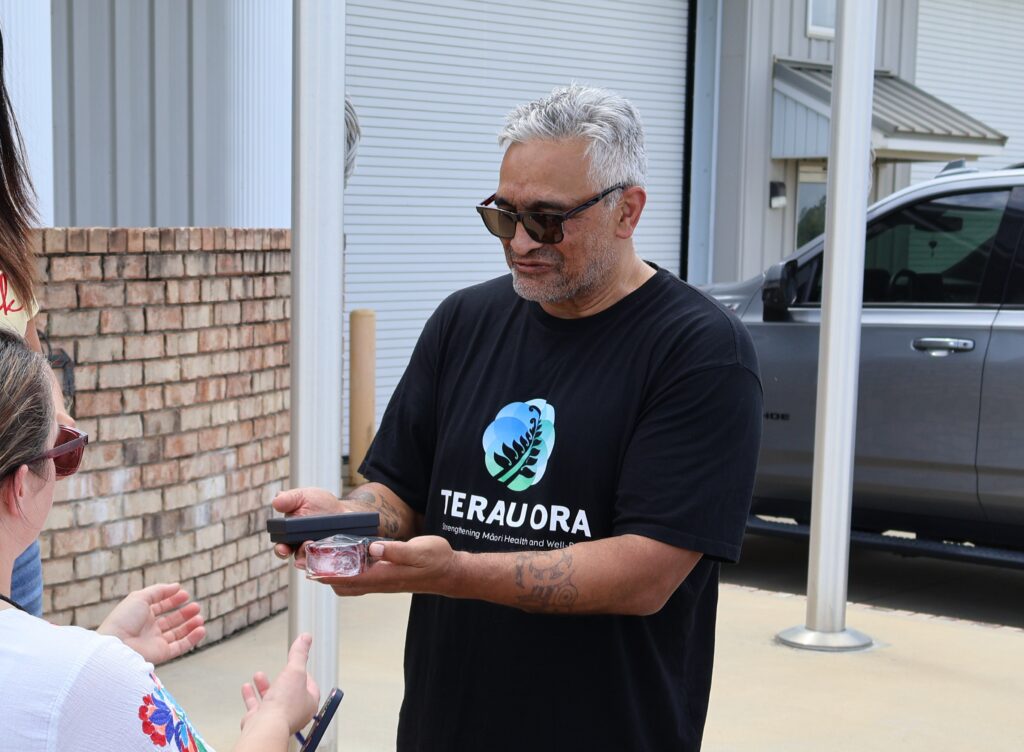
During the tour, a resident spoke with several Māori representatives and later presented one of his handmade woven baskets as a gift. In return, the visitors presented him with a pāua shell from New Zealand. Paua Shells are large, edible snails known for having the most vibrant and colorful shells in the world.
The delegation later enjoyed Indian tacos for lunch at the SAIL Center.
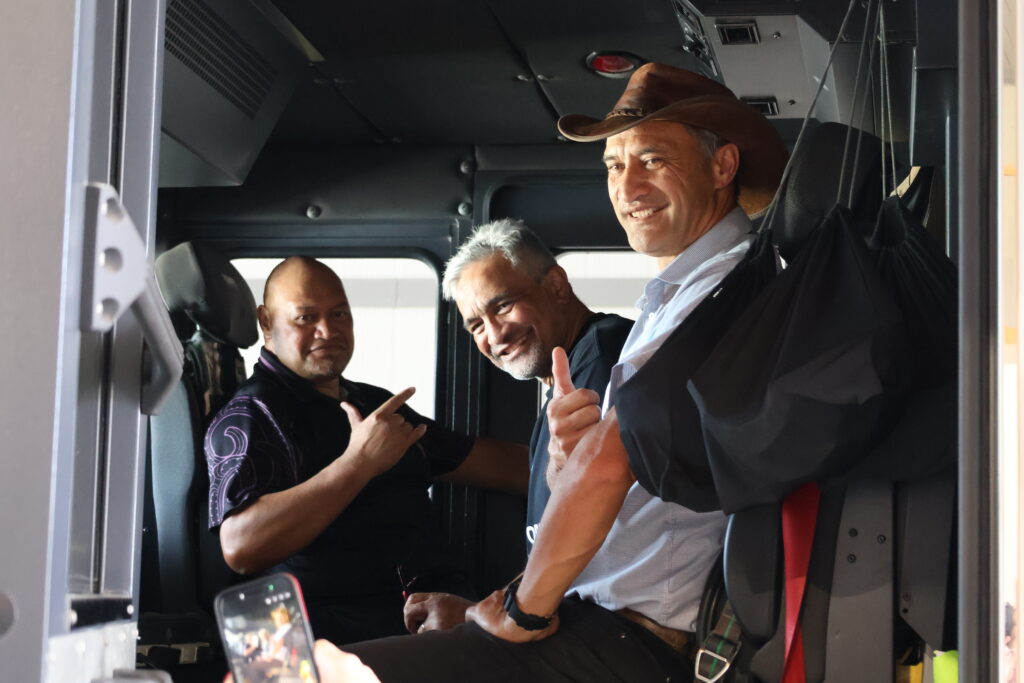
Members of the Poarch Creek Fire Department then led a tour of Fire Station #1, explaining how the department has grown from a small operation 40 years ago into its current organization. Representatives expressed particular interest in both the Fire Department and Health Clinic, noting the challenges many Māori communities face in accessing health care and emergency services.
While at the fire station, the Māori visitors taught and performed a haka for the Fire Department members. The haka is a traditional Māori ceremonial dance that historically was performed before battle. Today, it serves as an expression of cultural pride, unity and strength. Haka performances feature synchronized chanting, hand movements, stomping and expressive facial gestures.
This time together reminds us all that although we may be separated by oceans and miles, cultural exchanges with other Indigenous Tribes like the Māori, connect us all back together.
Having the opportunity to follow this tour and witness the exchange of cultures and histories firsthand was truly remarkable. It was especially meaningful to hear about the shared challenges the Tribe faces with other Indigenous communities, even if they are on the other side of the globe. I was able to see how exchanges like these can create valuable opportunities for mutual learning and getting insights from others’ experiences through their approaches and outcomes. My internship through the Advanced Career Development Program made this experience possible, and I am grateful for the opportunity to be part of it.
Written by: Caleb Davis, PCI Government & Public Affairs Intern